
Trend Alert: Carfentanil
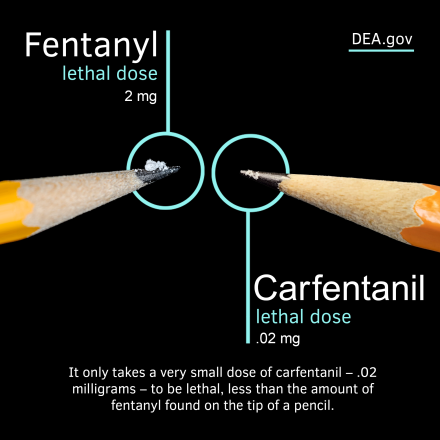
According to the Ventura County Medical Examiner, illicitly obtained carfentanil contributed to 14 fatal overdoses in Ventura County in 2025. Carfentanil is a novel psychoactive substance (NPS) that the U.S. Drug Enforcement Administration (DEA) defines as a “synthetic opioid originally developed for veterinary use, more specifically to tranquilize large animals such as elephants. It is extraordinarily potent and not approved for human use. In fact, it is estimated to be 10,000 times more potent than morphine and 100 times stronger than fentanyl.” Due to its potency, carfentanil can be more lethal than fentanyl at a much lower, even microscopic, doses.
Overdoses can be reversed with naloxone; however, the DEA notes, “Treating an overdose involving carfentanil is extremely difficult. While naloxone is widely used as an emergency antidote for opioid overdoses, it may not be effective against carfentanil in normal doses. Multiple, high doses of naloxone may be required, and even then, effective reversal of an overdose is not guaranteed.”
Learn more: Carfentanil: A Synthetic Opioid Unlike Any Other
Local Update: Kratom
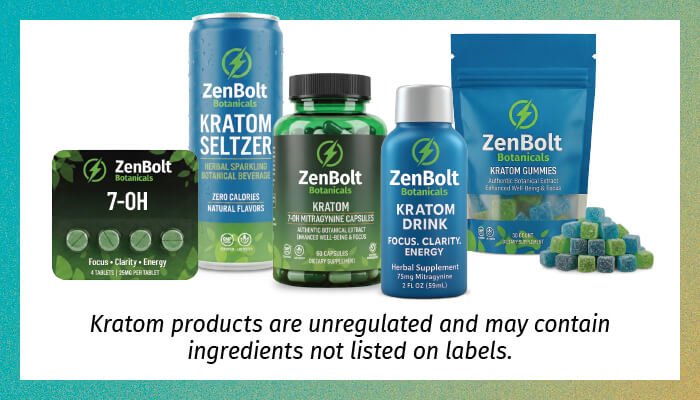
It is illegal to sell kratom products in the state of California, including the highly processed and concentrated form 7-OH, an opioid-like alkaloid more potent than morphine. However, there is anecdotal evidence that they are still being sold in Ventura County. The risk associated with these products include dependency, the need for detox and substance use treatment (including medication-assisted treatment), and in some cases, fatal overdose. Since 2018, there have been 46 overdose deaths in Ventura County involving kratom, with six occurring in 2024. These products continue to evolve and are available in multiple formulations such as drinks, tinctures, tablets, and gummies. They are also sold online, often with inaccurate or misleading descriptions, further challenging efforts to protect community members from the risks.
To learn more about the dangers associated with these products, please see: Kratom: What You Need to Know
Image: Idea Engineering. ZenBolt is a fictional brand used for illustrative purposes.
Spotlight: Utilizing Death Data to Save Lives
Under the leadership of Chief Medical Examiner Dr. Christopher Young, the Ventura County Medical Examiner’s Office (MEO) plays a critical role in identifying overdose trends, emerging substances, and populations at increased risk of harm. Through its partnership with COAST (Coalition for Overdose Awareness and Solutions Team), the MEO provides data that helps inform prevention strategies, public health planning, treatment programs, and community response efforts.
Ventura County has become recognized for its collaborative approach to overdose surveillance and prevention. By sharing data across agencies and disciplines, local partners are able to identify emerging threats and develop targeted interventions that save lives.
Learn more: Ventura County Medical Examiner's Office – Utilizing Death Data to Save Lives
Community Coalitions Encouraged by Decrease in US Overdose Death Rate
Data published in September 2024 by the US Centers forDisease Control and Prevention (CDC) confirms a trend, already reported anecdotally by emergency department staff across the country, that deaths from drug overdose are falling fast, for the first time since the US opioid epidemic began a generation ago.
More than 107,000 people died of a drug overdose in 2023, down from roughly 111,000 in 2022. Synthetic opioids, mainly fentanyl, were involved in nearly 70% of the deaths – approximately 75,000 people – in 2023, which was a slight drop from 2022.
Learn more:
Opioid crisis: Fall in US overdose deaths leaves experts scrambling for an explanation | The BMJ
DEA’s National Prescription Drug Take Back Day, October 26

The drug overdose epidemic in theUnited States is a clear and present public health, public safety, and national security threat. DEA’s National Prescription Drug Take Back Day reflects DEA’s commitment to Americans’ safety and health, encouraging the public to remove unneeded medications from their homes as a measure of preventing medication misuse and opioid addiction from ever starting.
Learn more:
www.dea.gov/takebackday